How to Prepare Your Car for a Cross-Country Road Trip
Preparing a vehicle for a cross-country road trip is a process of systematic checks rather than a single task. Long journeys expose a car to sustained highway speeds, variable temperatures, elevation changes, and unfamiliar terrain, all of which place cumulative stress on components that may perform adequately during short daily drives. A structured pre-trip inspection helps identify wear items and fluid levels that deserve attention before departure, and it gives the driver a clearer picture of the vehicle’s overall condition.
This article outlines a general framework for pre-trip preparation, covering fluid checks, tire pressure and condition, emergency kit assembly, and broader inspection routines. The sequence is not fixed, and the depth of each check depends on the vehicle’s age, mileage, maintenance history, and the specific route planned. The goal is transparency about what to examine and why, so that drivers can make informed decisions and consult a qualified mechanic when a finding falls outside their comfort or competence.
Nothing in this process guarantees the absence of breakdowns, since mechanical failures can stem from factors that inspections cannot always detect. What a checklist does provide is a consistent method for reducing obvious risks and documenting the vehicle’s condition at the start of the journey.
Fluid Checks as the Foundation of Pre-Trip Preparation
Fluids are the circulatory system of a vehicle, and their levels and condition offer early signals about how the engine, transmission, and cooling system are behaving. Before a long trip, check engine oil, coolant, brake fluid, power steering fluid, transmission fluid where accessible, and windshield washer fluid. Each fluid has a specified range on its dipstick or reservoir, and readings should be taken with the vehicle on level ground and, where the manufacturer specifies, with the engine at operating temperature or cold.
Level alone does not tell the full story. Color and texture matter: dark, gritty oil, milky transmission fluid, or coolant with visible debris can indicate conditions that warrant a mechanic’s assessment before departure. Topping off fluids with the correct specification is important, since mixing incompatible coolant types or using the wrong oil viscosity can create problems that are more difficult to resolve on the road than at home.
For a cross-country trip, it also helps to note any slow leaks that may have gone unnoticed in short-distance driving. A piece of cardboard placed under the engine overnight can reveal drips, and a small loss of coolant over a week of local driving may become a significant loss over several days of highway travel. Documenting these observations gives a mechanic useful context if a professional inspection follows.
- Check oil level and condition with the engine off and the car level.
- Inspect coolant level in the reservoir and the radiator only when the engine is cold.
- Verify brake fluid level and clarity in the master cylinder reservoir.
- Top off washer fluid and confirm the spray nozzles are working.
- Look for leaks or residue beneath the vehicle after it has been parked.
The order in which these checks are performed matters less than consistency. A simple notebook or phone note listing each fluid, its level, and its appearance creates a record that can be compared against the owner’s manual specifications and shared with a professional if questions arise.
Tire Pressure, Tread, and Load Considerations
Tires are the vehicle’s only contact with the road, and their condition directly affects handling, braking distance, and fuel consumption. Check tire pressure when the tires are cold, meaning the vehicle has been parked for several hours or driven less than a mile. The recommended pressure is listed on a sticker inside the driver’s door jamb or in the owner’s manual, and it often differs from the maximum pressure printed on the tire sidewall.
Under-inflation is common and can increase heat buildup at highway speeds, while over-inflation reduces the contact patch and can make the ride harsher. For a road trip with a full load of passengers and luggage, some manufacturers specify a higher rear tire pressure, so consult the load table in the manual. A quality pressure gauge kept in the glove box allows checks at fuel stops, when tires may have warmed and readings will be slightly higher than the cold specification.
Tread depth and sidewall condition deserve equal attention. A simple tread depth gauge or the penny test can indicate whether tires are approaching the wear indicators. Look for uneven wear patterns, which may point to alignment or suspension issues, and inspect sidewalls for cuts, bulges, or embedded objects. The spare tire, jack, and lug wrench should be checked as well, since a compact spare often requires a different pressure than the road tires.
- Measure cold pressure on all four tires, including the spare.
- Compare readings against the door jamb sticker, not the sidewall maximum.
- Inspect tread depth and look for uneven wear across each tire.
- Examine sidewalls for cracks, bulges, or punctures.
- Confirm the jack, wrench, and any wheel lock key are present and functional.
Tire age is an additional factor that is easy to overlook. Tires older than six to ten years may degrade even with adequate tread, and the date of manufacture is stamped on the sidewall. If the age or condition is uncertain, a tire professional can offer an assessment before the trip begins.
Building a Practical Emergency Kit
An emergency kit is not about preparing for every possible scenario; it is about having basic tools and supplies that support safety and self-reliance when help is not immediately available. The contents should suit the climate, season, and terrain of the route. A winter crossing of mountain passes calls for different items than a summer drive through desert regions, though some core supplies apply in most conditions.
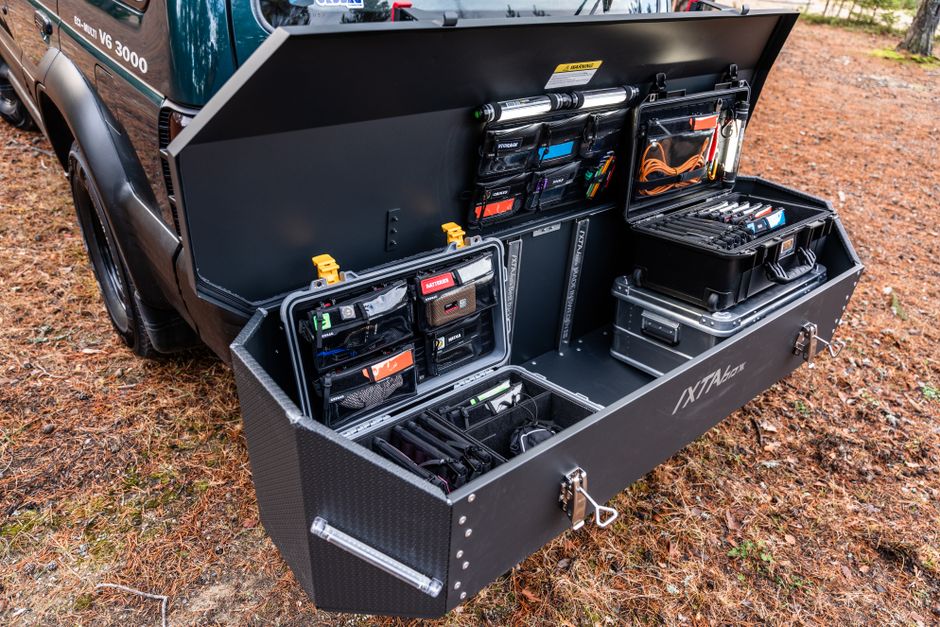
Standard items include a flashlight with spare batteries, jumper cables or a portable jump starter, a first aid kit, reflective warning triangles or flares, a basic tool set, duct tape, work gloves, and a tire pressure gauge. Water, non-perishable snacks, and a blanket or warm layers are useful in case of unexpected delays. A paper map or downloaded offline maps provide backup when cellular coverage is limited, and a phone charger with a power bank helps keep communication available.
A well-organized kit is one you have actually opened and inspected, not one that sits unexamined in the trunk for years.
Kits should be reviewed before each long trip. Batteries corrode, first aid supplies expire, and items borrowed for other uses may never return. Packing the kit in a sturdy container and securing it so it does not become a projectile during sudden braking are small details that improve its usefulness. Drivers should also know how to use each item, particularly the jack and jumper cables, before they are needed at the roadside.
Broader Pre-Trip Inspection Routines
Beyond fluids and tires, a pre-trip inspection covers the systems that affect visibility, control, and electrical reliability. Test all exterior lights, including brake lights, turn signals, and hazard flashers, ideally with a helper or a reflective surface. Replace worn wiper blades and confirm the washer system sprays correctly. Check the battery terminals for corrosion and secure connections, and note the battery’s age, since a battery near the end of its expected service life may struggle in temperature extremes.
Brakes should be evaluated for pedal feel, unusual noises, and pad thickness where visible through the wheel spokes. A soft or spongy pedal, grinding sounds, or a pulling sensation during braking are observations worth discussing with a mechanic. Belts and hoses should be inspected for cracks, glazing, or soft spots, and the serpentine belt tension can often be checked by hand. Suspension components, while harder to assess without a lift, may reveal themselves through unusual tire wear or handling changes.
For many drivers, a professional pre-trip inspection is a reasonable complement to personal checks. A mechanic with a lift can examine components that are difficult to see from ground level and can scan for stored diagnostic codes. The decision to schedule such an inspection depends on the vehicle’s maintenance history, the length and remoteness of the route, and the driver’s own confidence in assessing what they find.
Planning, Documentation, and Route Context
Preparation extends beyond the vehicle to the documents and plans that support the journey. Confirm that registration, insurance, and roadside assistance details are current and stored where they can be reached easily. Review the owner’s manual for the recommended maintenance schedule and note whether any service intervals will fall during the trip. Pack a physical copy of relevant contact information, including insurance and roadside assistance numbers, in case a phone is unavailable.
Route planning has a practical maintenance dimension as well. Long stretches without services, significant elevation gains, and extreme temperature swings all influence how the vehicle will be used. Identifying towns with repair facilities along the way and noting fuel stops in remote areas supports smoother decision-making if an issue arises. Open Road Journal has observed that drivers who document their pre-trip checks and keep records of any issues tend to have more useful information to share with mechanics when needed.
Ultimately, pre-trip preparation is a matter of method and attention rather than certainty. Checking fluids, tires, emergency supplies, and the broader condition of the vehicle provides a clearer baseline and surfaces items that may benefit from professional attention. Conditions on the road remain variable and outside any checklist’s control, but a consistent inspection routine gives drivers a more informed starting point for the journey ahead.